Showing posts with label Food Storage. Show all posts

June 3, 2012

Food Storage: Use It or Lose It!


Cooking with food storage: Use it or lose it

Deseret News
by Kim Grant
February 2011

After following prophetic counsel to store food for years, church members likely have shelf after shelf of No. 10 cans to show for it. But one of the toughest hurdles of all when it comes to food storage may be knowing how to actually use it. It won’t help to wait until that first emergency, either, so learn how to use it now so you won’t be “losing” it later.

The most important rule is to make sure you've stored more than just basics. Don't rely on only being able to eat 40 pounds of wheat. Most stomachs can’t tolerate a diet of only one main staple. So even though it’s tempting to create a food storage supply one item at a time, it’s better to keep a balance. For instance, supplement your storage with spices and sweeteners, like honey, so your taste buds won’t get food “fatigue.” Also, stock commercially canned items your family already eats. (This is strongly recommended. Focus on stocking your cupboards with what your family already eats! R)
Creating a cache of food is only the first step; the second is learning how to use it. One idea for using what you've gathered is having a “food storage” night once a month to practice cooking. This will also prepare your family for the unique tastes and textures cooking with food storage can entail. Another idea is to make it a game. Just type up the names of basic items, cut them up, put them in a bag and let someone choose one. Then go online or reference a food storage cookbook to learn what you can make with this ingredient.
With that in mind, here’s a quick and tasty recipe that may get you thinking about your food storage in a different, more positive way.
***
Food Storage Shepherd’s Pie
2 cups of canned beef chunks
1 can of green beans
1 can of corn
1 can of cream of mushroom soup
3 tablespoons dried onion flakes
salt and pepper to taste
potato flakes mixed to consistency with evaporated milk or water
Instructions: Mix the first five ingredients and place in dutch oven or casserole dish. Top with reconstituted potatoes. Bake at 325 degrees for 30 minute or until heated throughout.
Kim has written for magazines such as LDSLiving, the Washington Family, Back Home, Parents & Kids, and Natural Life for eight years. She has two novels with Covenant Communications.

May 22, 2012

Do You Have Enough Food Storage?


This is an article from preparednesspro.com. (I have been thinking about getting more prepared as the start of Hurricane season nears. There are some great visuals in this article on how much food we really need to have. R)
By Kellene Bishop

“How much food storage do I need?”

A common question in my line of work, and there are certainly plenty of numbersfood storagethrown out there. I confess that my answers aren’t always well received—I have this nasty habit of sharing facts. *grin* So, how much food do you really need in order to have a year’s supply for your family at any given time?

Do you have the right kind of food storage?

In my book, there’s nothing worse in my book than having a false sense of security. I will never forget the time that my husband was invited to “take a peek” at the newly acquired “food storage” that a friend of ours had purchased. This friend was just so tickled and so proud of himself for finally getting out there and doing something about providing better for his family in the future. Frankly, I always join in someone’s peace of mind when they are moving towards a more self-sufficient life. But on this occasion, my joy for this friend was short-lived. This friend has a wife and 5 children, so imagine my husband’s surprise when our friend showed him 365 regular sized soup cans of a hearty stew.  Yes, you read that right, folks. In this man’s mind, 365 cans of soup for a family of 7 is enough food for a year. Ooops! Now mind you, I’m a believer in miracles yesterday and today, but as I understand things, I don’t think that we’re supposed to put ourselves in a position in which we require a miracle to survive, as long as we can help it. There are SO many things wrong with this scenario I’ve just shared with you, but let’s just focus on the obvious here—he doesn’t have anywhere NEAR enough food for his family to last him a year.

food storageIn the world of “emergency preparedness” there are many resources which will help you calculate exactly how much food storageshould you stock up on for your targeted time frame. An internet search for a “food storage calculator” will bring up lots of nifty little sources. Since the Church of Jesus Christ of Latter-Day Saints (commonly referred to as “Mormons”) has been urging it’s members consistently since the 1800’s to have “food storage” I’m comfortable sharing with you there suggested guidelines to help you get an idea of “how much food storage do I need.” See the calculator here:

The first thing you will see on the usual food storage lists that are out there is the category of “grains”.  The standard rule of thumb you’ll hear most often is 300 pounds of grains per person, regardless of what their age is, for a year. I always plead that people NOT quibble about the ages of the persons in their family because it’s obviously likely to change… after all, kids get bigger with time, not smaller.  So since one doesn’t know when they will have to rely strictly on their year’s supply, it’s a good idea to prepare with the “worst case scenario” of needs of older kids in mind.
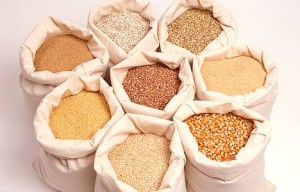
food storageNow grains constitutes all kinds of grains items such as flour, pasta, rice, muffin mixes, popcorn, spelt, quinoa, wheat, cereals, etc. (Notice we’re talking about WEIGHT here, so keep that in mind when you’re looking at that very big, but oh, so light box of Cheerios.)  Again, the most common rule of thumb amount for grains is 300 pounds. I’ve actually never said anything less than 350 pounds, but regardless, nearly all of you who are reading this will have that momentary shock to the system as you contemplate just how much grain that would mean  for a family of 4, let alone 7. Imagine how much that family on cable TV with 19 kids would need! Whooee!
Inevitably when I share the magic number of 350 pounds I will always hear someone declare “Oh, there’s no way that I consume that much grain in a year.” Well, either you live off of Hershey’s candy bars and plan on just leaving this life in a chocolate coma–perhaps not the worst that could happen *grin*—or you really don’t have a grasp on just how much a person actually consumes in a year. So think about this for a moment. Does your money ever last as long as you think it will? Surely you’ve experienced that “holy cow” moment in your life when you realized how fast that “extra $100” in your wallet disappeared. And surely you’ve at least seen plenty of folks who thought they had enough gas in their car to get them to their destination even though the needle was sitting on “empty.” And of course you’ve all experienced one of those days where you have no idea where all the time went, right?  Well then, isn’t it fair to say that when it comes to the topic of long-term food consumption there just might be a bit of perception error? And I’m about to show you just how far off that perception is in most homes–and I”m talking about homes in which people actually consider themselves to be mindful of these kinds of things.  Wait until I show you just how LITTLE that 300-350 pounds of grain in your food storage will provide you in the form of daily meals. (corrected)

The absolute minimum amounts of recommend food supplies for a year which provides you with “about a half of a small loaf of bread daily along with 3 small servings of beans” (corrected)are as follows:
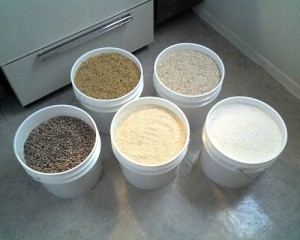
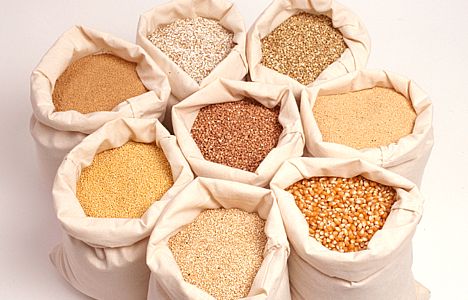
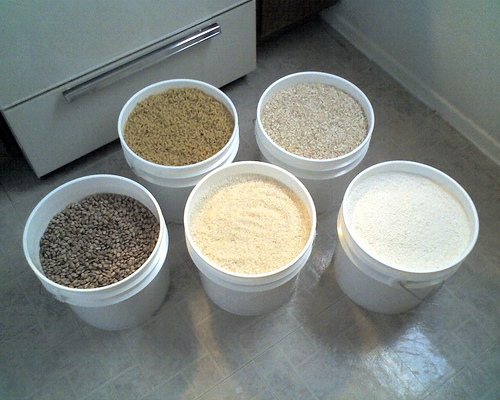
food storage300 pounds of grains per person (FYI, a pound of grain–depending on type–is between 2 1/4 – 2 1/2 cups)
75 pounds of legumes (pinto, black, red, lima, kidney, turtle, garbanzo, etc.)
75 pounds of milk (powdered, evaporated, etc.)
65 pounds of sweeteners (sugar, molasses, honey, etc.)
4 pounds of shortening*
2 gallons of oil *
2.5 pounds of leaving agents (yeast, baking soda, baking powder, etc.)
5 pounds of salt
45 gallons of water **

*This does NOT include other fats which are absolutely necessary for proper organ function such as buttercoconut oil, peanut butter, nuts, etc.

food storage**this is ONLY enough for an average of 3 daily consumable ration examples (corrected) as noted below and does NOT include the minimum of 2 quarts of watereach person should drink daily—minimum for proper body function, nor does it take into account any additional water needs such as laundry, bathing, sanitation, or any additional cooking.

That’s a LOT of Food Storage!!!

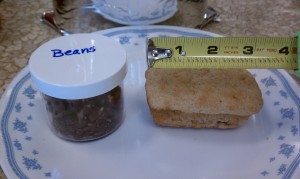
So, you see these massive amounts of food storage and think “Holy cow, that’s a LOT!” but I’m going to show you what JUST THESE items translate into a 3 times (corrected)DAILY RATION basis. Ready? Brace yourself…
food storage
Copyright 2012 Preparedness Pro All Rights Reserved

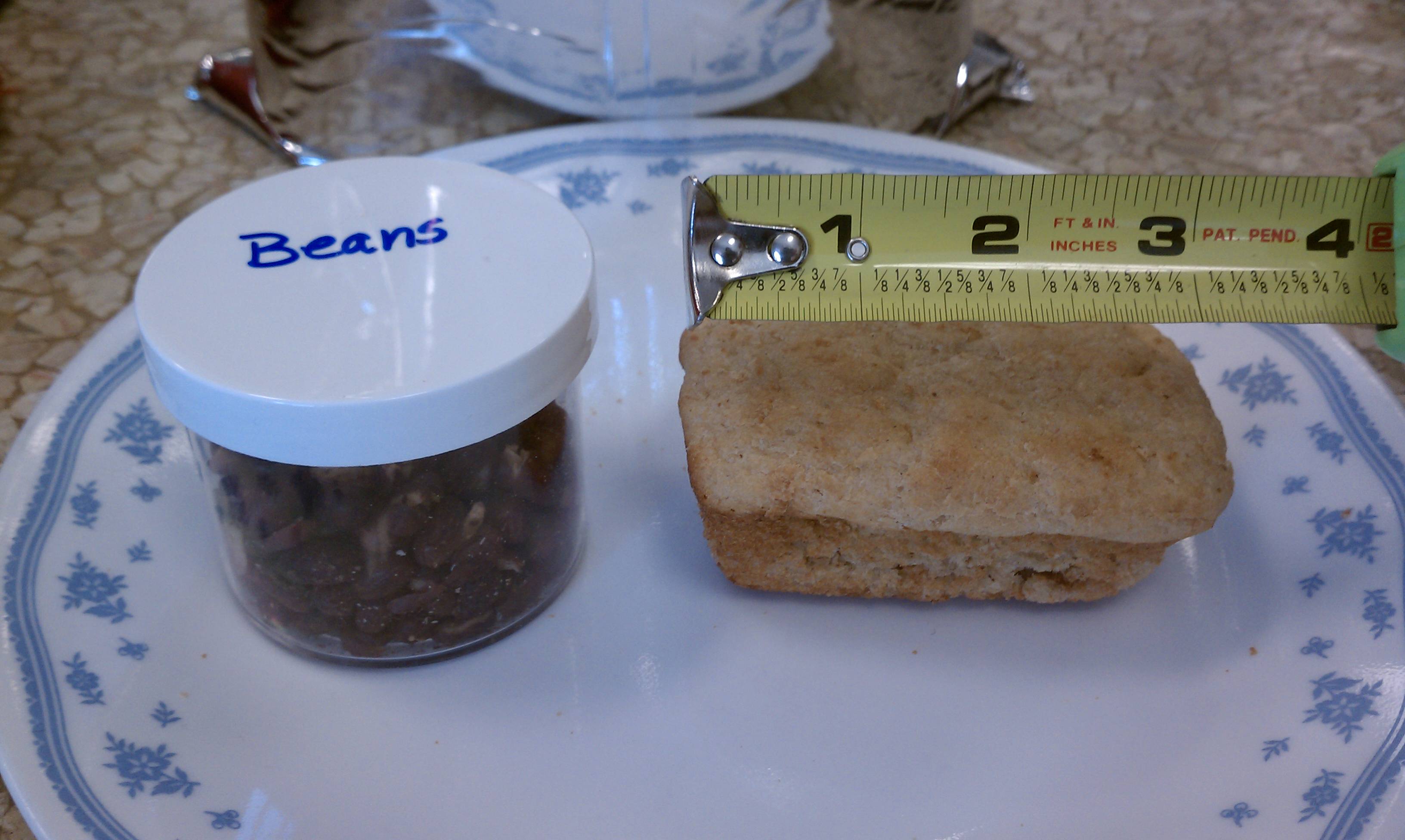
You see this pittance of an amount of beans and this tiny, UNdelectable  4 inch“loaf” of bread?  That’s what this “massive” amount of food translates into what you get to look forward to three times a day for one person.  Mmmmm…you’re just salivating like crazy right now aren’t you? Wow! That’s quite the feast there… Bet you can’t wait to dig into that, eh?

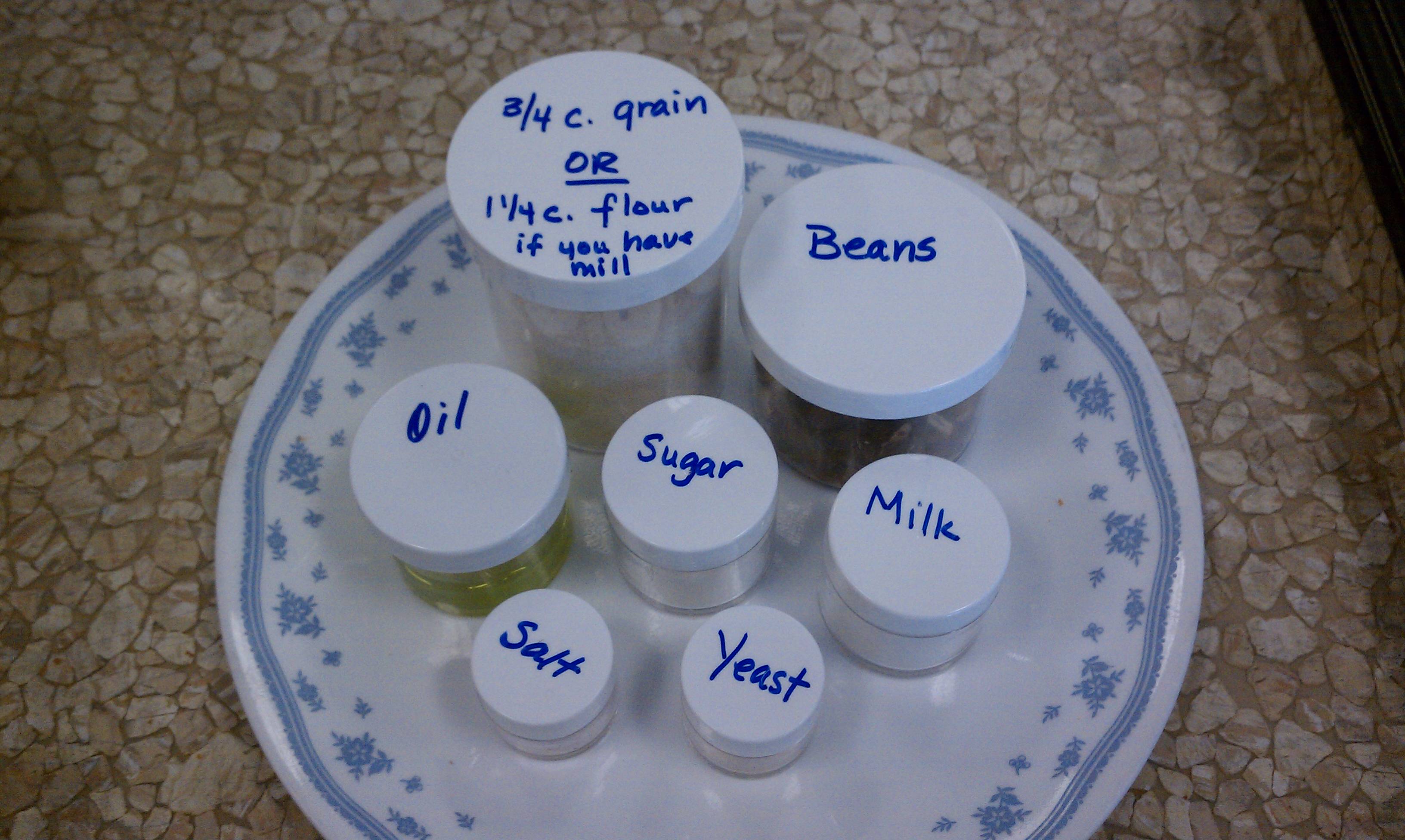
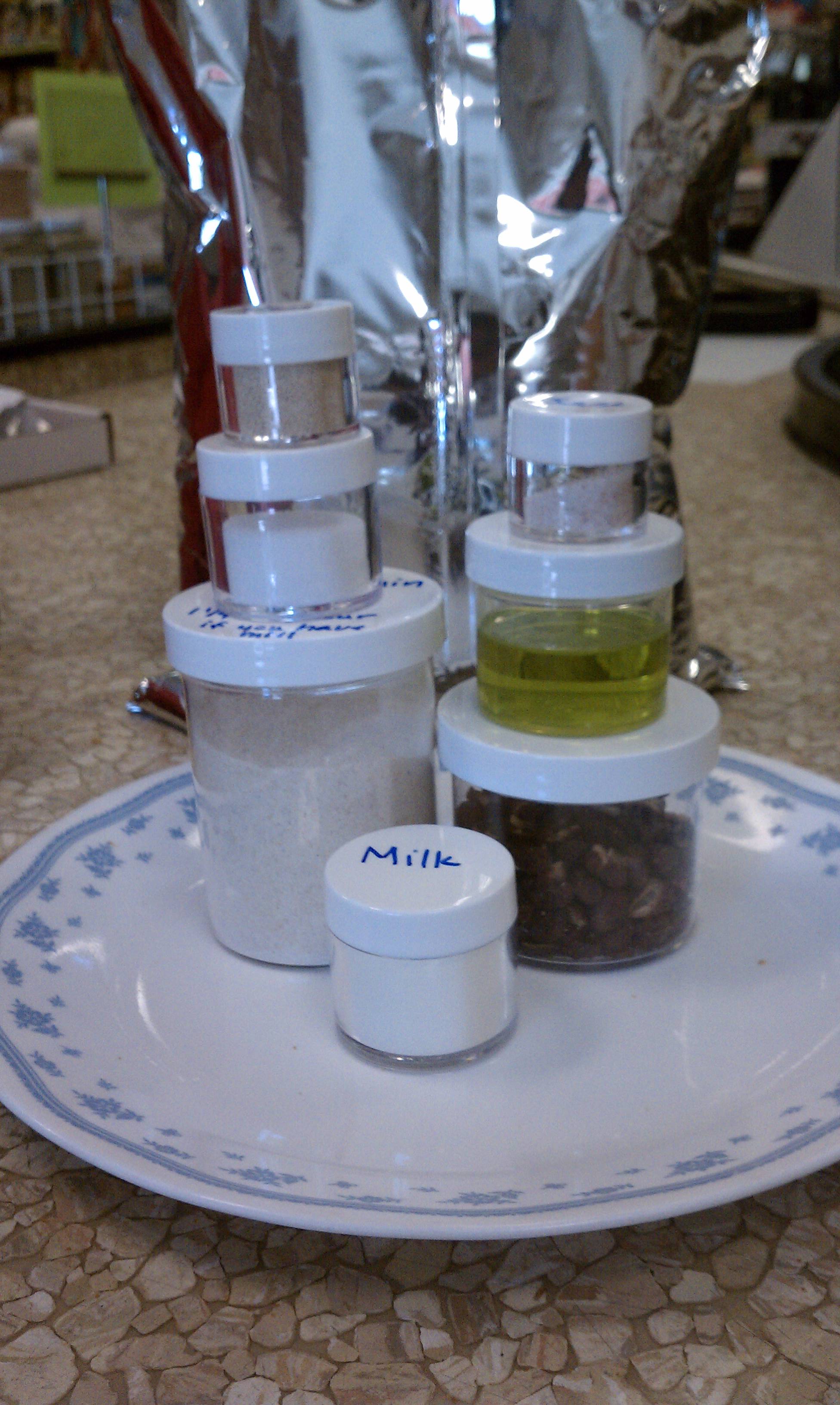
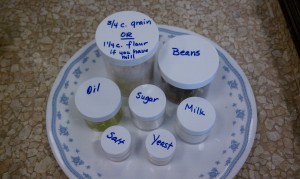
Here’s what was used to make this bountiful feast you see in the picture:
food storage
Copyright 2012 Preparedness Pro All Rights Reserved
¾ cup of grain (equals about 1 to 1 ¼ cup of flour IF and only IF you’re able to mill grind it)
1/3 cup of beans
2 Tablespoons of powdered milk
2 Tablespoons of oil (fat, lard, butter, etc.)
1 Tablespoon of sugar (in order to best activate the yeast)
2 ½ teaspoons of yeast
2 ½ teaspoons of salt
And approximately 24 ounces of water to cook the beans, make the bread, and for drinking water in order to ward off digestive ailments.

 What do YOU want your food storage to look like?

food storage
Copyright 2012 Preparedness Pro All Rights Reserved
Now, is there anything else missing…you know like fruits, vegetables, flavorings and spice, comfort foods, etc? How about some MEAT like chicken, ham, or beef? And where in the heck is the chocolate—medication of the sane?! And this isn’t exactly going to make my Blue Ribbon 100% Whole Wheat Bread either. Even if it did, I can tell you that my husband can happily polish off a whole loaf of a REAL sized loaf of bread in the first 24 hours after I’ve baked it, and I assure you, that’s not all he eats when I make bread…the irresistible, moist, light bread is consumed in addition to his regular meals. Seriously, can you even fathom serving your children or your elderly parents and grandparents nothing but this speck of food every day? This puts things in a little different perspective, I hope.

Perhaps now you understand why I cringe when people focus so much on traditional “food storage”? It’s simply NOT as abundant as people think it is, nor does it provide anywhere near enough calories to THRIVE. This kind of a minimalistic “preparedness” will not serve much more than to buy you a little bit more time before your most certain death—especially if you haven’t taken thought for the tools and skills needed to GROW and produce additional foods so that you’re not doomed for death by starvation on Day #375.

Consider this also…what about your INCREASED physical demands for nutrients because you’re having to do more food storagephysical labor that a true crisis scenario would demand? How about just lugging your bug-out bag for 5 miles every day? You think that this paltry amount of food will be enough to fuel your body and your spirit so that you can do that? How about the energy you’ll need to shovel a latrine, be alert and on guard, or washing laundry by hand? Can you also imagine just how grumpy people would be in an already stressful situation because this is all they have to eat?

So, do you have enough food storage? Um…I’m thinking that at least double these minimal amounts of food is much more in line with the reality you’ll want to deal with in the event that life drastically changes for us.

(Special thanks to one and only Preparedness Diva, Lisa Barker, of Honeyville Grains for taking the time to put this visual together!)

May 15, 2011

Four Tips to Make Food Storage Inventory and Rotation Easy

This is an article from the Mormon Times section of the Deseret News from May 6, 2011 by Leslie Probert.
Just something to consider...


Keeping track of food storage can be a big headache as you use what you store and need to keep replacing it. It is time-consuming to record everything you use on a list or even on the computer. It’s also easy to forget! You can keep track of your food storage without writing it down; the key is in how you organize your storage space.

As you buy food storage, store each kind of food in the same place. Arrange containers in rows so you can see at a glance how much of each food you have. It’s simple then to remember and mentally note what needs to be replaced as you use it. Remember to date all containers, so you can use rows of food stored the longest first.
Here are four storage ideas that make rotating food simple.


Shelves
You may be lucky enough to have a big room with built-in shelves. If you have only a small space or room, you can buy reinforced heavy-duty metal shelves that you assemble yourself. These will handle the weight of cans and are relatively inexpensive.
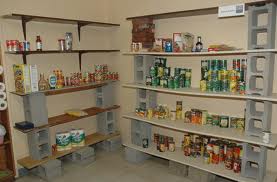
Store food in categories on your shelves, either in boxes of No. 10 cans, cases or even stackable half-case cardboard trays of canned foods, often stocked this way at the grocery store. If shelves are deep, you can keep older boxes or trays in the front, and add new ones to the back of each section. It’s simple to notice when you’ve used a box, case or half-case tray in each food category. You know then that it’s time to replace that food.
Commercial slanted shelves are expensive and are not necessary to rotate food. Inexpensive shelves allow you to spend more of your money on food.


Bookshelves
You can get a surprising amount of food in bookshelves provided they are strong enough. If you build them yourself, shelves should not be too long and should be made of solid wood. You may find sturdy bookshelves at a store selling used furniture. (In earthquake-prone areas, attach tall bookcases to a wall.) Stacking like food together in rows makes it easy to see when you’ve used a row. Then you know it’s time to restock.
Stacks
Stack buckets of like food together. When a bucket is missing, you know it’s time to replace it.
You may also stack No. 10 cans in their boxes or canned food in cases. When you use a box, you know it’s time to buy another one.
You can combine stacks of boxes and cases with heavy-duty shelves, which are stocked with one box or case of each kind of food. When you empty a row of food on the shelves, restock from your stacks of food and buy a new box or case to replace it. This method gives you easy access to stacked foods, making them easy to use.


Under a bed
You can store food in No. 10 cans or buckets in rows under a bed as a bed frame. Leave one container of each food out so you can use it. Once this food is used, take a new container of food from one side of the bed, and replace it with a newly purchased container on the other side. It helps to have a slick floor or a smooth piece of wood for this idea. If you store food under a single bed, it’s easy to lift the mattress to replace food under it.
You can also make a cardboard tray from a furniture box to fit sideways under a bed. Canned foods can be organized on their sides in rows. Take older food from one side of the bed, and roll new cans in their rows on the other.
One last rotation idea
I learned from experience to keep some of every food I store in the kitchen. I’m a woman in a hurry, and at mealtime I fix what is before my eyes. It’s easy to forget what I’ve stored if it’s not visible and easy to access.
Visually keeping track of food storage makes inventory so simple. You never have to worry about keeping a written record. It makes rotating your food amazingly easy!

March 9, 2011

4 Reasons to Have the Basics in Your Food Storage


4 reasons to have the basics in your food storage

Author: Leslie Probert : Food Storage Essentials 
Source: For Mormon Times

Wouldn’t it be great to find a complete list of what to store already made and ready to use? The problem, however, is that someone else’s list may plan for items and quantities that you would not use.
There are, however, a few standard basic foods that do apply to everyone when storing food. They are the basis of a healthy diet and provide a simple place to start planning. From there, you can create a menu that is tailored to your tastes and preferences using these basics. (For some ideas about menu planning, see past article "Four simple steps to planning food storage.")
For many years, members of The Church of Jesus Christ of Latter-day Saints have been counseled to store a year’s supply of food. Many people are beginning to see the value of being that well prepared, given the concerns of our day. You can choose how much you want to store.
What are the basic foods and suggested amounts?
The LDS Church gives the following recommendations:

Store grains: 25 pounds/person/month. Grains include oatmeal, long-grain rice, pasta, cornmeal, barley and white flour. White flour has a shorter shelf life. Many people choose to store wheat, which stores a very long time. With a grinder, you can take your time to use your stored wheat when you feel like it.
Store beans: 5 pounds/person/month. This can include other legumes like lentils and split peas.
Four big reasons for storing these basic foods
1. They are the least expensive foods to store. The cost of storing up to a year’s supply of food can add up significantly. These foods save a great deal of money when planning long-term food storage.
2. They are the most space efficient foods to store. If you are concerned about where you would put a supply of food to last a long time, these foods will take the least amount of space. Think of all the space taken up in packaging of the usual foods we eat.
3. They have a significantly longer shelf life than the usual foods we eat. Dry beans and most grains will store 30 years when packaged for long-term storage and stored in a cool, dark place. This gives you the peace of mind of knowing you have plenty of time to store and use them. (Some people choose to store some canned beans and meats. These save time and fuel, and store for around five years in a cool, dark place. See past articles "More on fast cooking dry beans" and "Consider storing canned meats.")
4. They are the most nutritious foods we can store. In fact, these are the very foods experts are pleading with us to eat today. That’s an argument for finding fast and delicious recipes to be eating what you store. It can actually be a matter of life and death. Here’s what experts are saying:

"Why care about whole grains? Because they have more fiber, vitamins, minerals and phytochemicals than refined grains. Studies have linked them to a reduced risk of heart disease, stroke, Type 2 diabetes, some cancers and obesity. The [current] government Dietary Guidelines recommend that at least half the grains we eat should be whole grain — at least three servings a day for most people" (Wellness News Letter, University of California Berkeley, October 2006).
The risk of many significant life-threatening health issues is reduced by simply eating whole grains!
Here’s another health concern that we don’t often hear much about. "Diverticulosis is … the formation of … small pouches in the intestinal walls … ('caused, at least in part, by a low fiber intake'). About half the population of the industrialized world develops diverticulosis after age 60. ... About 10 to 25 percent go on to develop diverticulitis, a severe disorder in which the pouches become inflamed or infected" (Wellness Newsletter, University of CA Berkeley, February 2007). We reduce the risk of this problem by eating more fruits, vegetables and whole grains.
Additionally, the American Heart Association says, "Unrefined whole-grain foods contain fiber that can help … you feel full, which may help you manage your weight."

Concerning beans, according to a recent report issued by nutrition experts at Michigan State University, "Eating just four cups of cooked dry beans every week can help most people reduce their risk of developing heart disease. …
"The review, which examined more than 25 years of research involving dry beans and various health issues, found that beans are a powerful food to improve overall health and specifically to prevent heart disease, the leading cause of death in the United States. ...
"MSU researchers also found that eating dry beans (including canned beans) can help reduce the risk and severity of other deadly health problems including obesity, diabetes and certain types of cancer" (click here to see the American Bean Board's report). 
"Here’s another good reason for eating beans. Many of the pigments that make fruits and vegetables colorful are known to be powerful antioxidants that may help protect against chronic diseases such as heart disease and cancer. Now food scientists have found similar healthful pigmented compounds (called flavonoids) in the coating of beans" (Wellness Newsletter, University of California Berkeley, February 2001).
So the risk of today’s serious health concerns is also reduced by eating beans.
Planning your food storage around a foundation of the basics has significant advantages when you’re storing food. Given the incredible nutrition of these foods, it hardly makes sense to store them without using them.